The GTM software market is in a consolidation cycle, and the people it lands hardest on are not the vendors. They are the RevOps leads holding an annual contract that renews in four months for a product whose roadmap now belongs to an acquirer they never evaluated.
The sales engagement category is the clearest live example. Clari bought Groove in 2023. In December 2025 Clari and Salesloft completed their merger, with Salesloft becoming the go-forward brand (clari.com now points at salesloft.com). The combined company holds two sales engagement products and two conversation intelligence products, sitting on a forecasting engine that was not built to unify them. It has stated a “one company, one platform” goal and has a joint roadmap in development, which is the right ambition and also an acknowledgement that the platform is not unified yet. Groove has been neither renamed nor sunset, and no public statement describes its long-term place. Outreach, meanwhile, has become notable mostly for still being independent.
If you are a customer of any of those products, that is not industry news. That is a change in what you own, and your renewal date is when it becomes your problem.
This post is the playbook: what acquisition actually changes in a product, the diligence questions that get real answers, the contract terms to insist on, and the one re-calculation most teams skip.
What acquisition actually changes, in order of how fast it hits you
Vendor M&A gets announced in the language of synergy. The effects arrive on a predictable schedule, and almost none of them show up in the first quarter.
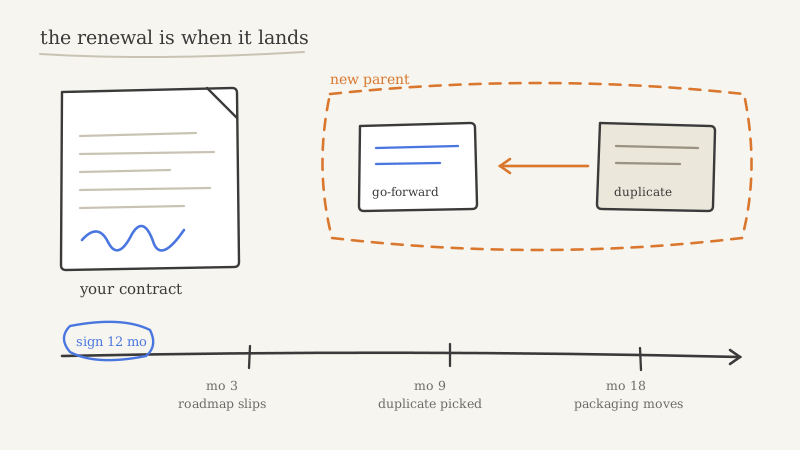
Months 0 to 3: nothing visible, and a reassurance email. Your account team tells you nothing changes. At this point that is usually true and also uninformative.
Months 3 to 9: attention moves. Engineering capacity gets pulled toward integration work: single sign-on across the suite, unified data models, billing consolidation. None of that is on your wish list. Features you were promised slip a quarter, then another. This is the window where “it is on the roadmap” quietly stops meaning a date.
Months 6 to 12: the org chart turns over. Your CSM changes, possibly twice. Support tiers get restructured. Institutional knowledge about your specific implementation (the custom field mapping, the reason your sequences are built that strange way) walks out the door with the people who had it.
Months 9 to 18: duplicate products get resolved. When an acquirer owns two products that do the same job, one of them eventually becomes the migration path and the other becomes the thing being migrated. This rarely gets announced as a sunset. It shows up as a new product being “where we are investing,” while your product gets maintenance releases.
Months 12 to 24: the price changes shape. Not always upward on the headline rate. More often the packaging moves: a feature you used at no extra cost becomes part of a higher tier, or usage that was bundled starts getting metered. Consumption-based AI pricing has made this much easier for vendors to do without ever raising the per-seat number.
You cannot stop any of this. You can price it, and you can refuse to sign a long term through the middle of it.
The seven questions to put to your rep
Ask these in writing, by email, before the renewal call. The answers matter less than the pattern of which ones get answered.
- Which of your products is the go-forward platform for my use case, and which is the migration target? If the acquirer owns overlapping products, one of them is already losing internally. Ask directly. A rep who cannot answer this is telling you it is not decided, which is itself the answer.
- Name the three features on my renewal rationale and give me their delivery quarters. Anything that comes back as “the joint roadmap” is not a commitment. Either it gets a quarter and a remedy in the order form, or you do not price your renewal on it.
- Is my product line receiving net new engineering investment, or maintenance? Vendors will not say “maintenance.” They will say “stability and enterprise hardening.” That is the same sentence.
- What is the committed support response time, and is it changing with the suite restructure? Get the current SLA in the contract rather than in a help center article the acquirer controls.
- If you sunset or merge this product, what is the migration commitment? You want notice period, migration support, and price protection on the destination product, named explicitly.
- What does full data export look like, in what format, and how long do I have after termination? Ask for a sample export file during the evaluation. “We support export” and “we support an export you can actually load somewhere else” are different claims.
- Can my contract be assigned to a future acquirer without my consent? Most can. Knowing that before you sign a three-year term is the point.
The clauses worth more than the discount
Procurement instinct in a consolidation year is to push on price. Price is the least valuable thing to win here, because the risk is not that you overpay by fifteen percent. It is that you are locked into thirty-six months of a product being deprecated around you.
Shorten the term. This is the single highest-value move and the one vendors resist hardest, because annual-plus terms are how they hold revenue through an integration. Take the smaller discount for a twelve-month term. You are buying the right to re-decide once the consolidated platform actually exists, and that option is worth more than the discount you traded for it.
Tie the renewal rationale to remedies. If you are renewing because of a specific capability, name it in the order form with a date, and attach a consequence: pro-rated credit, early termination without penalty, or a price freeze. A roadmap item with no remedy is marketing.
Freeze the packaging, not just the rate. Negotiate that your current entitlements stay in your current tier for the term. Rate protection alone does not stop a vendor from moving a feature you depend on into a tier above you.
Cap the metered lines. Any consumption component (AI credits being the current favorite) needs a published overage rate in your contract. If the vendor will not state what a credit buys, that line is an open-ended liability in a document you are signing.
Get the exit terms while they still want the deal. Data export format, retention window after termination, and transition assistance. Nobody negotiates these with enthusiasm at renewal. Everybody needs them at migration.
Much of this mirrors what we recommend for services agreements in outsourced SDR contract clauses to negotiate before signing. The logic transfers cleanly: you are protecting against the counterparty changing, not against the price.
Re-run the math, because the alternative got cheaper
The reason most teams renew a consolidating vendor is switching cost, and the reason switching cost feels enormous is that it never gets quantified. So quantify it, on both sides.
The stay number: seats, plus implementation already sunk, plus metered usage at realistic volume, plus the add-ons you have accumulated, plus a fair share of the salary of whoever administers the platform. For a twenty-five rep team on an enterprise sales engagement platform, seat cost alone commonly runs in the high five figures annually before anything else, and the fully loaded number clears six figures more often than buyers expect.
The leave number: migration labor in hours, sequence and template rebuild, integration rework, retraining, and a realistic productivity dip. Then subtract what you stop paying.
Now divide both by meetings booked. If you have never run that calculation, our outbound cost per meeting benchmark gives you the denominator, and the outbound tech stack audit covers how to score the rest of the stack at the same time. Most teams who do this discover two things: the platform was never the expensive part, and a chunk of what they are renewing duplicates something else they already pay for.
What consolidation does not fix
Here is the part the merger press releases obscure. A unified platform is a better place to orchestrate outbound. It does not touch the layers that decide whether outbound works, and those layers sit outside every sales engagement contract regardless of who owns the vendor.
Sending infrastructure. No sequencing engine gives you sending domains, mailboxes, or warmed reputation. Orchestrate perfectly on a thin sending setup and you get well organized mail landing in spam. That layer has to be built and operated on purpose, which is why Vendisys runs it as owned infrastructure: Inboxy supplies the sending domains, mailboxes and warmup, and EMY sends sequences through infrastructure we own rather than a shared pool we rent. If deliverability is unfamiliar ground, start with the cold email deliverability guide.
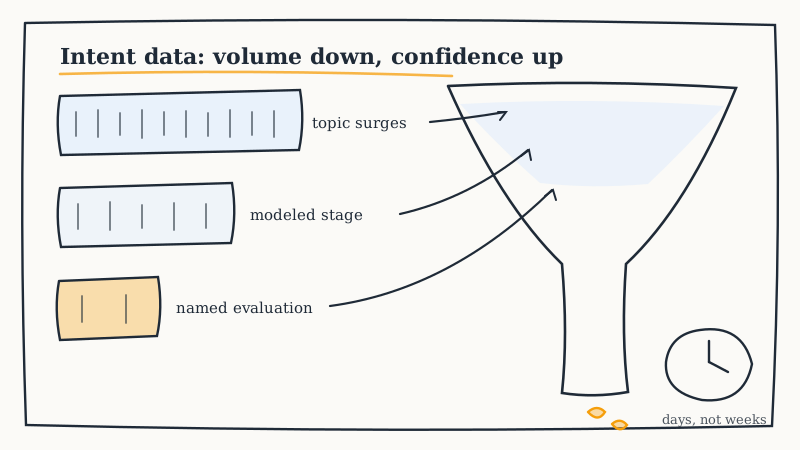
Data that resolves. Platforms send what you load. Every bounce is a withdrawal from your domain reputation, and catch-all domains are where most validators give up and return “unknown.” Scrubby is the validator built to clear catch-all email safely, which matters because catch-alls are usually the largest unresolved slice of an enterprise list. The mechanics are in verifying catch-all emails before cold outbound.
The channels your platform does not own. LinkedIn runs on identity and IP reputation that no sales engagement vendor provides, which is what AIA exists for (aged, verified LinkedIn identities on dedicated residential IPs) with LIA running outreach on top of it. KALI works a different path entirely by landing on the calendar instead of the inbox. And once more than one channel is live, replies fragment across tools: Underfive is a unified inbox for email and LinkedIn wired into your CRM, which is the difference between a reply worked within the hour and a reply found on Thursday.
Knowing when to send. Every platform executes the sequence you configure. None of them tells you which accounts are worth sequencing this week. CAM is the signal layer for that: every buying signal on your market in one feed. Trigger-based outbound timing covers turning those signals into send decisions.
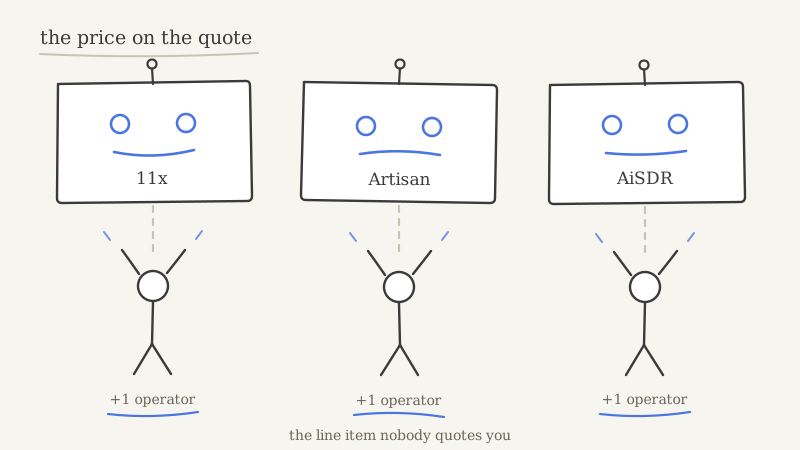
The operator. The line item that appears on no quote. Somebody owns targeting, messaging revisions, domain health, suppression, and the weekly read of the numbers. On a software contract, that somebody is on your payroll, and their time is usually a larger number than the license.
The decision, plainly
Renew short if the product still does its job and your team is productive on it. Twelve months, packaging frozen, metered rates capped, exit terms documented. Re-decide when the consolidated platform ships rather than guessing at it now.
Renew long only for independence you can verify. A vendor with no acquirer and no duplicate products is a genuinely lower-risk multi-year bet, and it is reasonable to pay for that. Just confirm it is actually true rather than currently true.
Leave if your product is the duplicate rather than the go-forward platform, or if the capability you were waiting on has slipped twice with no date. Migration is painful once. Being migrated on the vendor’s schedule, with their timeline and their incentives, is worse.
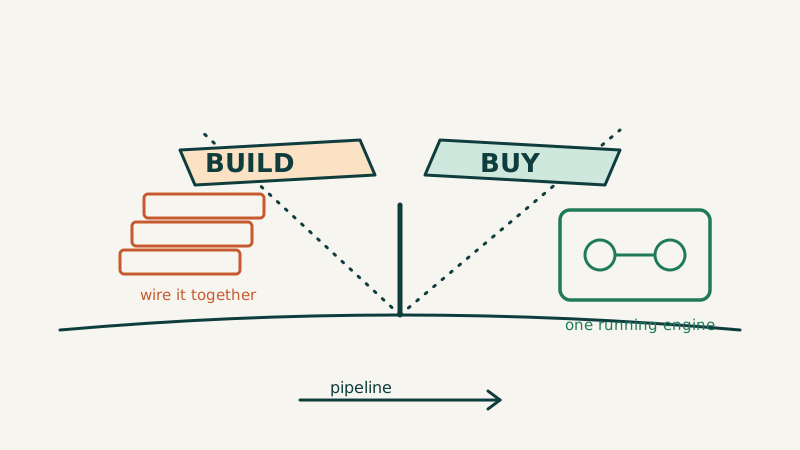
Reconsider the model if the audit shows that most of your real cost and nearly all of your risk sit in the layers no platform covers. That is the honest case for the other approach: Vendisys is outsourced GTM infrastructure rather than software you operate, running outbound across email, LinkedIn and calendar on infrastructure we own, measured on meetings booked and revenue closed rather than seats provisioned. Whether that beats a platform seat depends entirely on whether you want to own the operating work. If you are still mapping the category, sales engagement platforms versus AI SDRs is the useful next read.
One last thing
Consolidation in a software category usually means a layer has become a commodity. Sequencing is table stakes now, which is exactly why the surviving vendors compete on forecasting, conversation intelligence, and AI agents instead.
Treat that as a signal about where your money belongs. Pay the minimum that gets you adequate orchestration, sign a term you can live with through somebody else’s integration project, and put the rest into the parts nobody is acquiring: infrastructure that lands, data that resolves, signals that tell you when to move, and a person whose actual job is to run the thing.