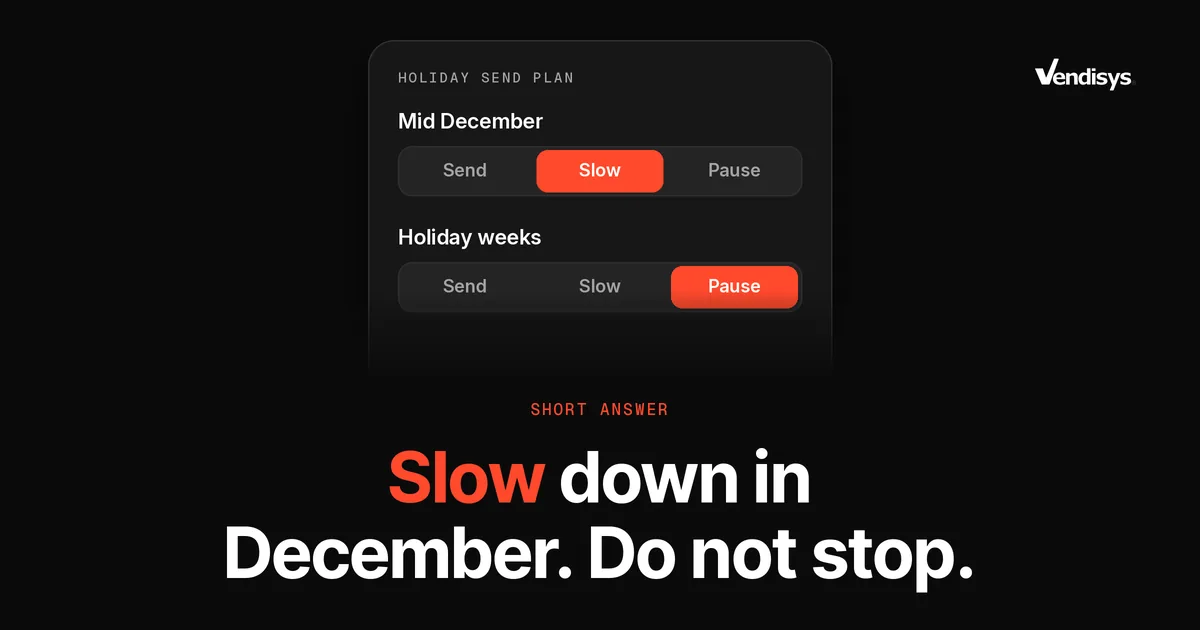
Short answer: slow down, but do not switch everything off. Reduce volume from mid December, stop new first touches over the holiday weeks themselves, and keep answering every reply. Use the quiet weeks to rebuild lists, refresh messaging and keep your mailboxes warm, so outbound restarts at normal pace in the first full week of January instead of from a standing start.
Why a Full Stop Costs You
Stopping everything for three or four weeks feels safe, but it has costs that show up in January. Mailboxes that send nothing for weeks lose some of the steady sending pattern that keeps them in good standing, and restarting at full volume on the same day looks like a spike to mailbox providers. Sequences that were halfway through lose their momentum. And the pipeline you would have booked for mid January now starts to build in February.
Sending normally through the holidays has the opposite problem. Buyers are away, out-of-office replies pile up, and a first touch that lands on December 24 is easy to ignore and easy to resent.
What to Keep, Slow and Stop
| Activity | Mid December | Holiday weeks | First week back |
|---|---|---|---|
| New first touches | Slow, best accounts only | Stop | Restart gradually |
| Follow-ups to engaged prospects | Keep | Keep, light | Keep |
| Replies and meeting requests | Keep | Keep | Keep |
| Mailbox warmup | Keep | Keep | Keep |
| List building and enrichment | Start | Keep | Finish |
The principle is simple: stop starting new conversations when nobody is reading, and never stop finishing the ones that are already open.
What to Do With the Quiet Weeks
- Rebuild the January list. Re-verify contacts, remove people who changed jobs, and add accounts that showed buying signals in the last quarter. A signal layer such as CAM is useful for spotting job changes and new leaders who start in January.
- Refresh messaging. New budgets and new plans make early January a natural moment for a different angle. Write it now, not on January 4.
- Keep infrastructure warm. Warmup should continue through the break. Our guide to domain warmup timelines explains why consistency matters more than volume.
- Clear the reply backlog. Out-of-office replies often include a return date. Log it and schedule the follow-up for after that date.
How to Restart in January
Do not return to full volume on day one. Ramp over the first week or two, starting with follow-ups and your strongest segments, and watch bounce and complaint signals as you go. Our post on monitoring sending domain reputation covers what to watch.
Frequently Asked Questions
Does this apply outside the US and Europe?
Use the same principle around whichever holidays matter in each market you sell to. The dates change, the approach does not.
What about LinkedIn and calendar outreach?
Apply the same rule. Keep conversations going and pause new connection requests and calendar invites over the holiday weeks, when nobody is planning meetings.
Is December ever a good month for outbound?
The first half often is, especially for buyers with budget left to spend before year end. Our guide to trigger-based outbound timing covers how to find those buyers.
If you want your program planned around the calendar by a team that has been running outbound since 2002, book time with the Vendisys team.