Most teams pick a dialer the same way they pick a coffee order: whatever the last rep used. That is a mistake. The dialer you run quietly decides how many conversations your SDRs have per hour, how coherent those conversations sound, and how much regulatory risk you are carrying. Choose wrong and you either waste rep hours listening to ringtones or you burn your phone numbers and your brand reputation at scale.
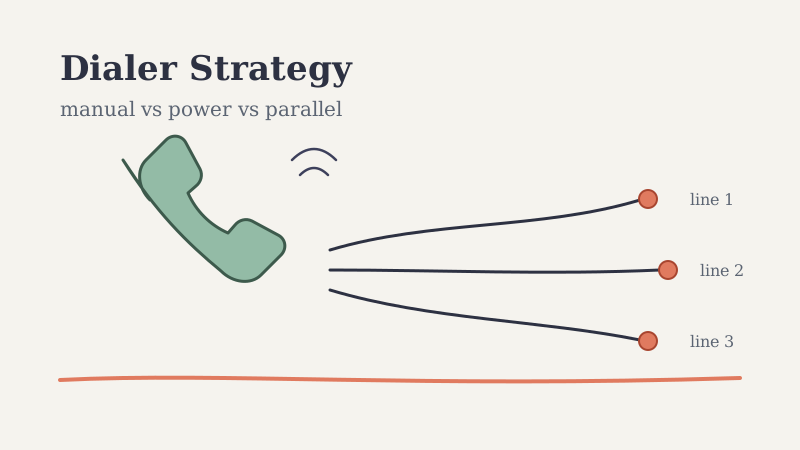
There are three broad categories: manual dialing, power (single-line) dialing, and parallel (multi-line) dialing. Each one trades something away. This guide breaks down what each does, the math behind connect rates, and how to match the setup to the outbound motion you actually run.
The three dialer types, defined
Manual dialing is exactly what it sounds like. A rep reads a number, types or clicks it, and waits. No automation between the record and the ring. It is slow, but every dial is deliberate.
Power dialing (also called single-line or progressive dialing) automates the mechanical part. The system dials one number at a time from a list, connects the rep when a human picks up, and moves to the next record after a disposition is logged. One line, one call, no overlap.
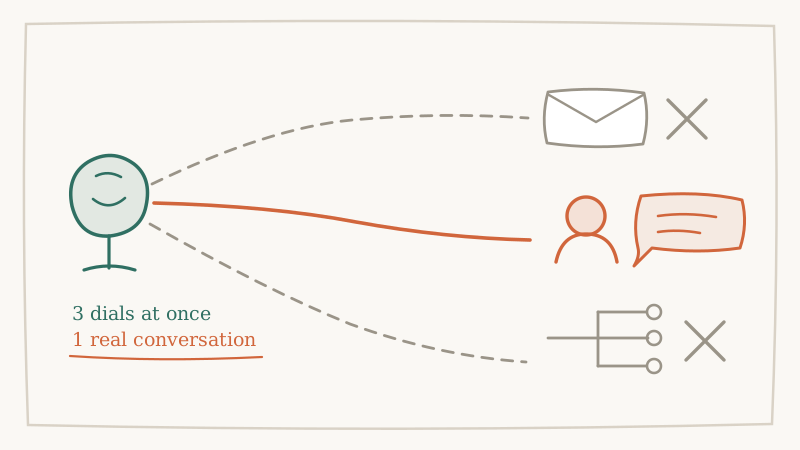
Parallel dialing (also called multi-line or predictive dialing in its more aggressive forms) dials several numbers at once from the same rep’s queue. When one of those calls connects to a live human, the rep is bridged in and the other simultaneous calls are dropped. The bet is simple: most dials do not connect, so dialing four at a time surfaces a live conversation faster.
The math that actually matters
Cold call connect rates in B2B outbound typically sit somewhere between 3 and 8 percent per dial. Hold that number in your head, because it drives everything.
At a 5 percent connect rate, a rep dialing manually might place 40 to 60 dials in an hour and land 2 to 3 live conversations. That same rep on a power dialer might hit 60 to 80 dials and 3 to 4 conversations because the mechanical dead time disappears. On a parallel dialer running four lines, the same hour can produce 150 to 250 dial attempts and 8 to 12 conversations.
On paper, parallel dialing wins by a landslide. In practice, three things eat into that advantage:
- Awkward connects. When two of the four lines answer at the same instant, the rep can only take one. The other prospect gets dead air or a hang-up. Do that often enough and you are training your best-fit accounts to distrust your number.
- The pause. Multi-line systems need a fraction of a second to bridge the rep in after a human answers. Prospects hear that tiny delay and read it as a robocall. Your open rate on the conversation drops before the rep says a word.
- Number reputation burn. Blasting hundreds of simultaneous dials from a small pool of numbers gets those numbers flagged as spam or scam-likely fast. Once carriers label you, your connect rate collapses regardless of dialer.
So the real comparison is not dials per hour. It is quality conversations per hour that convert to booked meetings, net of the reputation damage you take on.
When each setup is the right call
Choose manual dialing when the list is small and the accounts are high value. If you are working 40 named enterprise accounts, every dial should be researched and intentional. Speed is irrelevant. A rep who knows the account and reaches a decision maker will out-book any parallel setup here. Manual pairs well with heavy pre-call research and multithreading across the buying committee.
Choose power dialing when you want volume without sacrificing much conversation quality. This is the default for most mid-market SDR teams. You get roughly a 40 to 60 percent lift in dials over manual, no awkward double-connects, no bridge delay, and a much gentler impact on number reputation. It is the balanced middle, and for the majority of outbound programs it is the correct answer.
Choose parallel dialing only when your total addressable market is large, your list quality is verified, and you have a real number-rotation and compliance setup behind it. High-volume SMB outbound with thousands of similar accounts can justify multi-line dialing. But it demands discipline: a large pool of local-presence numbers, active reputation monitoring, and clean data so you are not burning dials on disconnected or wrong-party records.
Data quality is the hidden variable
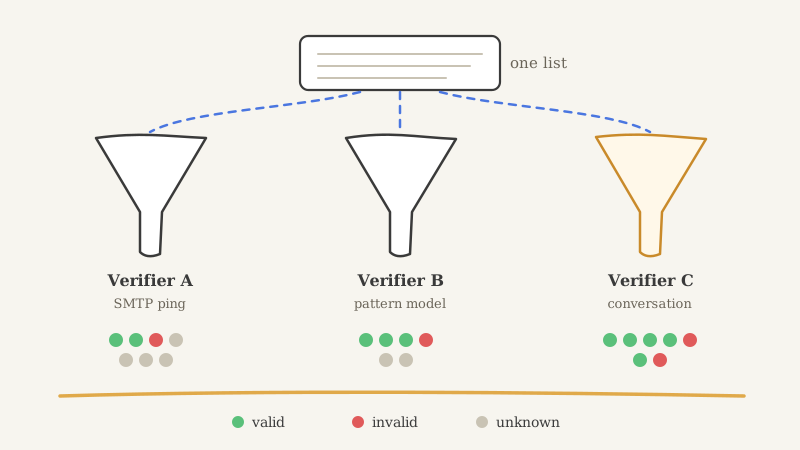
Here is the part most dialer comparisons skip. A parallel dialer amplifies whatever is in your list. Feed it clean, verified contact data and it surfaces conversations quickly. Feed it a stale list full of dead numbers and job-changers, and you have just built a very fast machine for dialing voicemail.
The same logic applies to the email side of your outbound. Before you scale any channel, the underlying contact data has to be validated. Running numbers and inboxes through a validation layer like Scrubby keeps your bounce and wrong-party rates down, which directly protects both your dialer connect rate and your sending reputation. Dialer choice and data hygiene are not separate decisions; the aggressive the dialer, the more your data quality determines whether it helps or hurts.
Compliance is not optional
Multi-line and predictive dialing sit in a heavily regulated zone. Depending on jurisdiction, rules around abandoned calls, consent, call windows, and disclosure can apply. If more than a small percentage of your parallel dials connect and then drop because no rep was available, some regulators treat those as abandoned calls with real penalties attached. Manual and power dialing carry far less of this risk because there is never a connected call without a rep on the line.
If you cannot staff a dedicated compliance and number-management function, that alone is a strong argument to stay on power dialing.
The connect is only half the job
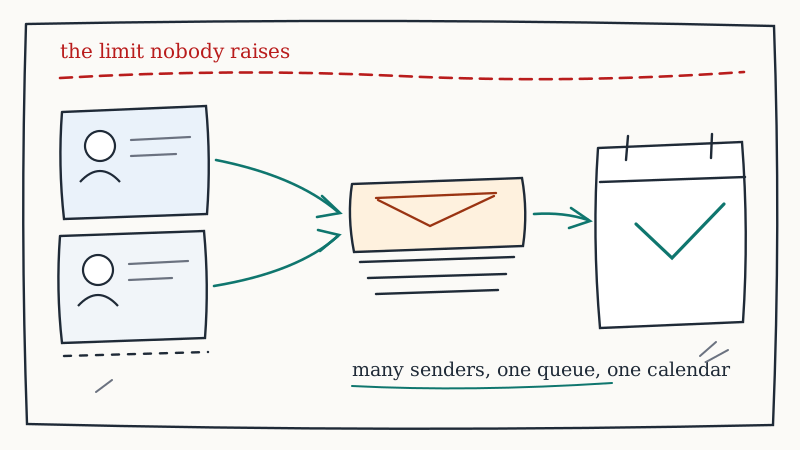
A dialer gets you a live human. It does nothing to convert that human into a booked meeting. The rep still has to earn the next step, and the fastest way to lose momentum after a good call is a clumsy handoff to scheduling. This is where a lot of dial volume quietly leaks. The rep gets verbal interest, then sends a generic calendar link, and the meeting never confirms.
Tightening that final step matters more than squeezing another 20 dials into the hour. Using a booking flow built for outbound, like Kali, turns a warm phone conversation into a confirmed calendar slot before the prospect’s attention drifts. The best dialer setup in the world underperforms if the path from “yes” to “on the calendar” has friction in it.
How to decide in one pass
Run through these four questions:
- How big is the list? Small and high value points to manual. Large and repeatable opens the door to parallel.
- How clean is the data? Unverified data means power dialing at most, until you fix hygiene.
- Can you manage number reputation and compliance? No means power. Yes, with a real setup, means parallel is on the table.
- What is your bottleneck, dials or conversion? If reps are booking well but starved for conversations, add dialing speed. If they get plenty of connects but few meetings, the problem is script and handoff, not the dialer.
Most teams talk themselves into parallel dialing because the dials-per-hour number is seductive. The teams that actually book more meetings usually run power dialing on clean data with a tight booking motion behind it.
If you would rather not build and manage this stack in-house, an outsourced outbound partner already runs the dialer, the number rotation, the compliance layer, and the data hygiene as one system. You can see how Vendisys structures that infrastructure so your team gets the conversations without owning the operational overhead.