Reps obsess over subject lines and opening hooks, then close the email with a throwaway line like “Do you have 30 minutes Thursday?” The call to action is the part of the email that actually asks for something, and it is usually the weakest sentence in the whole message. Get it wrong and every other minute you spent on research, personalization, and deliverability is wasted.
The CTA is where interest either converts into a reply or quietly dies. This guide breaks down the two families of cold email CTAs, when each one works, and the specific patterns that turn a “maybe” into a booked meeting.
Why the CTA carries so much weight
A cold email has one job: earn a response. Not a signature, not a sale, just a reply that opens a conversation. Everything before the CTA is setup. The CTA is the ask.
The problem is that most CTAs ask for too much, too early. “Book 30 minutes” is a big commitment from someone who has known your company for eleven seconds. You are asking a stranger to block calendar time, prepare, and sit through a pitch before they have any evidence you are worth it. The mental math for the prospect is simple: high effort, unknown payoff. So they do nothing.
The fix is not a clever trick. It is matching the size of the ask to the amount of trust you have actually earned, which at the cold stage is close to zero.
Hard asks vs soft asks
Cold email CTAs fall into two buckets.
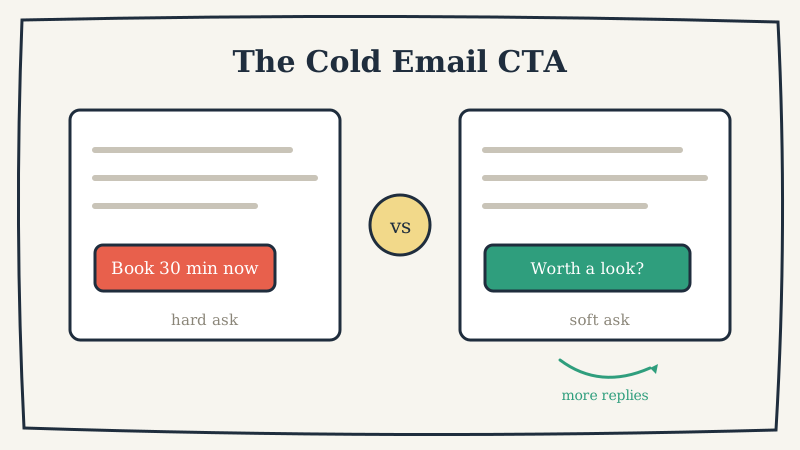
A hard ask requests a specific, high-commitment action right away. Examples:
- “Are you free for a 30 minute call Thursday at 2pm?”
- “Here is my calendar link, grab a slot that works.”
- “Can we set up a demo next week?”
A soft ask requests a low-commitment micro-yes that keeps the conversation going without demanding a meeting yet. Examples:
- “Worth a quick look?”
- “Is this even a priority for your team this quarter?”
- “Want me to send over the two-minute version?”
- “Should I share how a company like yours cut cost per meeting in half?”
Hard asks convert intent into a calendar event fast, but only when intent is already high. Soft asks convert curiosity into a reply, which you then nurture toward a meeting. In cold outbound, where the prospect has no relationship with you, the soft ask usually wins because it lowers the barrier to saying yes.
When to use a soft ask
Default to a soft ask for true cold outreach: first touch, no prior relationship, no inbound signal. The goal of email one is not to book the meeting. It is to get a reply that confirms the problem is real and the timing is worth exploring.
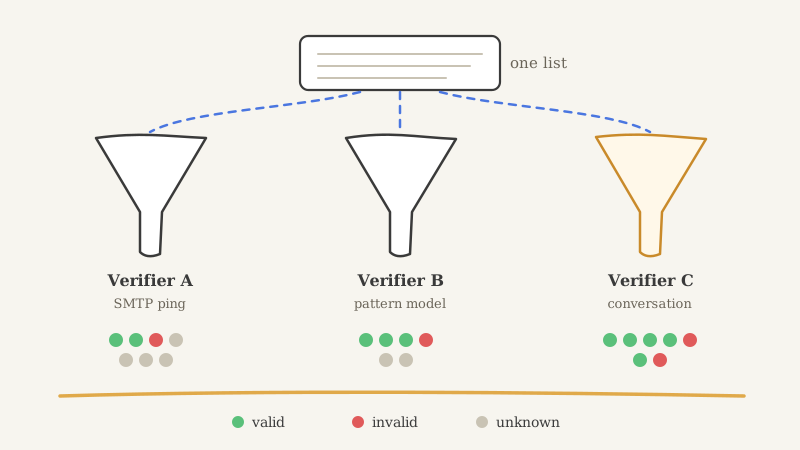
Soft asks work because they give the prospect an easy on-ramp. Answering “is this a priority?” costs almost nothing. Once they reply, you are in a conversation, and conversations convert to meetings at a far higher rate than cold sends do. A reply also tells you the address is live and engaged, which is a signal your list quality is holding up. If you are seeing near-zero replies across the board, the issue may be deliverability rather than copy, and running your list through a verification tool like Scrubby before you send protects your sender reputation from the invalid addresses that quietly tank inbox placement.
The best soft asks share three traits:
- Binary and easy. A yes or no question is easier to answer than an open one. “Worth a look?” beats “What are your thoughts on this?”
- Framed around their outcome, not your product. “Want to hit your Q3 pipeline number with less headcount?” beats “Want to see our platform?”
- Genuinely optional. The prospect should feel they can say no without friction. Paradoxically, giving them an easy out increases replies.
When a hard ask actually works
Soft asks are the default, not a rule. Hard asks outperform when intent is already elevated:
- Warm or triggered outreach. The prospect visited pricing, downloaded a resource, or a trigger event fired (funding round, new exec hire, competitor switch). Intent is high, so asking directly for time respects it.
- Later in a sequence. By email four or five, a prospect who has opened every message has shown interest. A direct ask now is appropriate.
- Reply follow-through. Once someone answers a soft ask with “yes, tell me more,” your next move should be a clean hard ask. Do not make them ask you for the meeting.
The mistake is leading cold with a hard ask, or clinging to soft asks after the prospect has clearly signaled they are ready. Read the temperature and match it.
Make the hard ask frictionless
When you do go for the meeting, remove every unit of effort between “yes” and a booked slot. The classic failure is a back-and-forth negotiation over times that dies after two emails.
Two patterns reduce that friction:
- Propose one specific time, not an open menu. “Does Thursday at 11am ET work? If not, name a time and I will make it happen.” One concrete option is easier to accept or counter than “let me know your availability.”
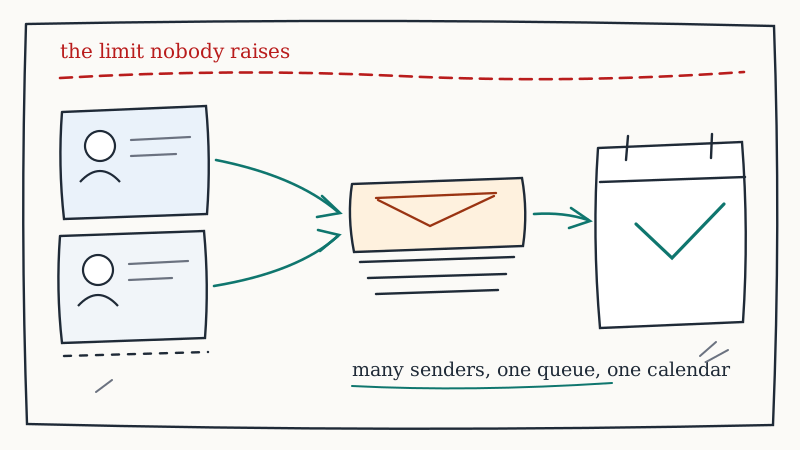
- Send the meeting as a calendar invite the prospect can accept in one tap. Instead of trading times, a calendar-invite-first approach puts a real event in front of them. Tools like Kali let you lead outreach with an accept-or-decline calendar invite, which collapses the booking step into a single click and lifts show rates because the meeting is already on their calendar the moment they say yes.
The principle is the same as the soft ask: reduce the effort required to move forward. Whether the next step is a reply or a booked call, your job is to make that step as close to zero effort as possible.
Common CTA mistakes to kill
- The double ask. Two questions in one CTA splits attention and lowers response. Ask for one thing.
- The vague ask. “Let me know if you are interested” gives the prospect nothing to react to. Interested in what, and what happens next?
- The pushy calendar dump. Dropping a scheduling link in a first cold email reads as “do my sales team’s work for me.” Earn the reply first, then share the link.
- The guilt close. “I will assume you are not interested if I do not hear back” burns goodwill. Save graceful exits for a genuine breakup email, not the CTA.
- The buried ask. If your CTA is sentence six of a dense paragraph, it disappears. Give it its own line so the eye lands on it.
A simple framework for choosing your CTA
Before you write the closing line, answer one question: how much trust have I actually earned so far?
- Zero trust (first cold touch): soft ask. Aim for a reply, not a meeting.
- Some trust (engaged, mid-sequence, or a trigger fired): transitional ask. “Want the two-minute version, or should we just grab time?”
- Real trust (they replied positively): hard ask. Propose a specific time or send a calendar invite.
The CTA is not a formatting decision you make at the end. It is a strategic read of where the prospect actually is. Match the ask to the trust, keep the effort near zero, and your reply rate, not just your open rate, starts to move.
If your team is sending at volume and the CTA still is not converting, the bottleneck is often upstream: list quality, sequencing, and channel mix all feed the moment a prospect reaches your ask. Building that full outbound engine in-house is slow and expensive, which is why many teams run it through an outsourced GTM partner like Vendisys that owns the infrastructure end to end, so every CTA lands in front of the right person at the right time.