Outsourced SDR Ramp Time: A Realistic Timeline to Your First Booked Meetings
The fastest way to be disappointed by an outsourced SDR partner is to never agree on when results should appear. The founder expects meetings in week two. The agency is still configuring infrastructure in week two. Neither party is wrong about the work, but the mismatch quietly poisons the relationship, and by the time the first real meetings land in week six, the founder has already decided it is not working.
Most of that friction is avoidable. The ramp curve for outsourced outbound is reasonably predictable, and writing it down before you sign is worth more than any clause in the contract.
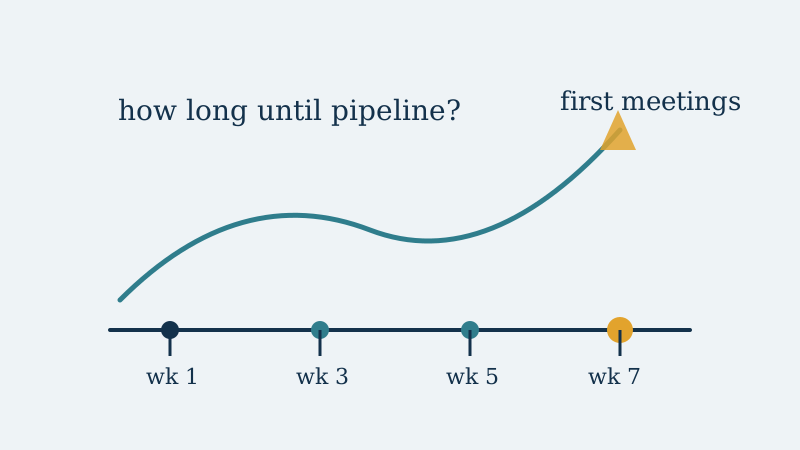
Weeks one and two: infrastructure, not output
Nothing measurable happens in the first two weeks, and that is correct. This is when domains get purchased and warmed, mailboxes get provisioned, the ideal customer profile gets pressure-tested, and the first list gets built and validated.
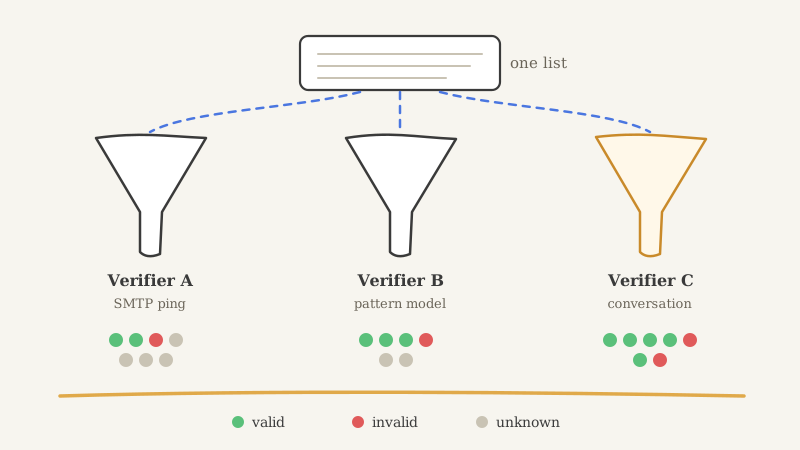
Skipping this phase to “start sending faster” is how programs die in month two. Sending from cold domains or to an unvalidated list torches deliverability before you have any pipeline to show for it. A serious partner runs the list through validation, ideally something built for hard catch-all cases like Scrubby, before a single email goes out. If your partner is pushing volume in week one, that is a red flag, not a head start.
What you should see in this window: a documented ICP, a messaging framework you have approved, and a warm-up schedule. If you are getting silence instead of artifacts, push.
Weeks three and four: first sends and first signal
Now email starts going out, at low volume and ramping. You will not see meetings yet. You will see leading indicators: open rates, reply rates, and the quality of those replies. This is the diagnostic phase, where the messaging gets tuned against real responses.
The mistake here is judging the program on meeting count when meeting count is structurally still near zero. Judge it on reply quality and iteration speed. Are positive replies trickling in? Is the partner adjusting copy based on what is landing? A good team treats the first 200 replies as research, not failure.
Weeks five through seven: meetings start landing
This is when the curve bends. Volume is at steady state, messaging has been tuned against real data, and the first genuinely qualified meetings get booked. For most B2B motions with a defined ICP, weeks five to seven is the honest answer to “when will we see meetings.”
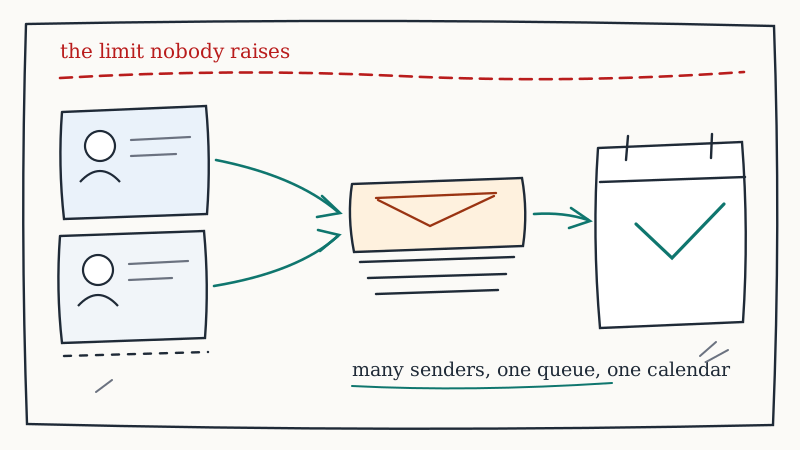
The conversion from positive reply to booked meeting is its own discipline, and it is where a lot of outsourced programs leak. A warm reply that waits two days for a manual scheduling back-and-forth often goes cold. Pairing the outbound with a fast, calendar-based booking motion (tools like Kali exist specifically to compress that step) is the difference between a reply and a meeting on the calendar.
Weeks eight and beyond: compounding
After the second month, a healthy program compounds. Domains are fully warmed, messaging is dialed, and the partner is iterating on segments rather than starting from scratch. Meeting volume should climb and stabilize. This is also the point where you can finally judge cost per meeting honestly, because the ramp distortion is behind you.
Where to push if the timeline slips
If you are past week seven with no qualified meetings, the questions are specific, not vague:
- Is the list the problem? Ask for deliverability and bounce data. A high bounce rate means validation was skipped or rushed.
- Is the message the problem? Ask to see reply samples. No positive replies at all by week five is a messaging failure, not a volume one.
- Is the ICP the problem? Replies that say “wrong person” or “not a fit” mean the targeting needs rework, not more sending.
- Is the handoff the problem? Positive replies that never convert to meetings point at a broken booking step, not a broken top of funnel.
A capable partner welcomes these questions because the data exists. If the answers are evasive, that tells you more than the meeting count does.
Set the expectation in writing
The single highest-leverage thing you can do before signing an outsourced outbound engagement is agree, on paper, that infrastructure dominates month one, signal appears in weeks three to four, and meetings land around weeks five to seven. That shared curve survives the anxious moment in week two when nothing is happening yet.
At Vendisys, we would rather a client hold us to a clear ramp than expect a fantasy and feel let down by reality. The realistic timeline is not slower. It is just honest, and honest is what compounds.