When founders evaluate outsourced outbound, they tend to compare vendors on price per month and pick the cheapest credible one. That is the wrong axis. The number that matters is not the price, it is the pricing model, because the model decides who carries the risk, and whoever carries the risk controls the behavior you get.
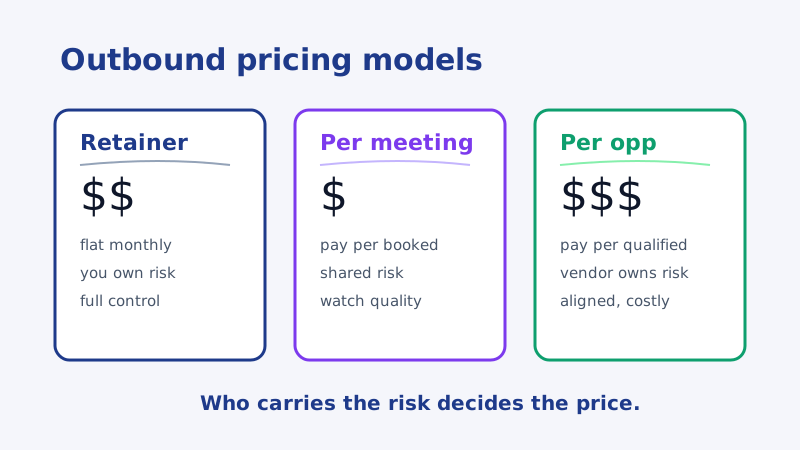
There are three models in the market: retainer, pay-per-meeting, and pay-per-qualified-opportunity. Each one quietly optimizes for something different. Here is how they actually compare, and which one fits which stage.
Retainer: you pay for capacity, you own the risk
In a retainer model you pay a flat monthly fee for a defined amount of activity: a number of contacts worked, sequences run, channels covered, SDR hours allocated. The vendor commits to effort, not outcomes.
What you are really buying: dedicated capacity and control. You can steer the targeting, the messaging, and the offer week to week. The vendor has no incentive to chase easy meetings because they get paid the same either way, which means they will run the program you ask for rather than the program that books the most calendars fastest.
The catch: you carry the outcome risk. If the campaign underperforms, you still pay. That is only a good trade if you have something the vendor does not: a clear ICP, a tested message, and a reason to believe the channel works for you. Retainer rewards companies that know what they want and need execution, and punishes companies that are still guessing.
Fit: post-product-market-fit teams with a known ICP, or any team that needs full control over messaging and targeting (regulated industries, complex enterprise sales, founder-led narratives).
Pay-per-meeting: shared risk, watch the quality line
In pay-per-meeting you pay a fee for each meeting booked, sometimes with a small base plus a per-meeting rate. The vendor only makes money when calendars get filled.
What you are really buying: aligned activity and a low floor. If nobody books, you pay little. The vendor is motivated to actually generate meetings rather than just send volume.
The catch: the incentive is to maximize meetings booked, not meetings worth taking. Without tight qualification criteria written into the contract, you get curiosity calls, tire-kickers, and prospects who agreed to a slot to make the SDR go away. The model can also push vendors toward the easiest-to-book segments rather than your highest-value ones. Pay-per-meeting works when you can define a qualified meeting precisely (title, company size, expressed need, show-up requirement) and enforce it with credits for no-shows and disqualified bookings.
Fit: teams testing a new motion or market who want to limit downside, and teams with the sales maturity to define and police meeting quality.
Pay-per-qualified-opportunity: aligned incentives, premium price
In the per-opportunity model you pay only when a meeting converts into a qualified pipeline opportunity by an agreed definition. The vendor carries most of the risk.
What you are really buying: maximum alignment. The vendor eats the cost of bad targeting and weak messaging because they only get paid on outcomes that move pipeline. In theory this is the cleanest version of “pay for results.”
The catch: the vendor prices the risk back in. Per-opportunity rates are high because the vendor is underwriting your funnel, and they will only take the deal if they believe your product converts. Vendors who offer this model are selective about who they work with, and they will want control over enough of the funnel to protect their economics, which can mean less flexibility for you. There is also a definitional fight waiting to happen: what counts as “qualified” is where the money is, so the contract has to nail it.
Fit: companies with proven conversion and healthy unit economics that would rather pay more for predictable, outcome-based cost than manage a program.
The pattern underneath all three
Notice the through-line: the more risk the vendor carries, the more control they take and the more they charge; the more risk you carry, the more control you keep and the less you pay per outcome. There is no free lunch where you offload all the risk, keep all the control, and pay the least. Anyone selling that is mispricing the deal and will either cut corners or churn you.
The other thing every model shares is a dependency on data quality. None of these economics work if you are paying a vendor to mail a list full of dead addresses. A pay-per-meeting vendor working a list with a 20 percent bounce rate will burn sending reputation and book fewer meetings, and you will both blame the wrong thing. Cleaning the list with a validation layer like Scrubby before the program starts protects the deliverability that every pricing model quietly assumes. The same logic applies to channel mix: pairing email with a calendar-invite channel like Kali gives the vendor a second way to reach a prospect, which lifts the meeting and opportunity rates that the per-meeting and per-opportunity models depend on.
How to choose
Ask one question first: do you know your ICP and message, or are you still finding them?
- If you are still finding them, you do not yet have anything worth underwriting, and per-opportunity vendors will not take you anyway. Use a retainer so you keep control while you learn, or a pay-per-meeting deal with strict qualification to cap your downside.
- If you know them and have proven conversion, you can afford to buy outcomes. Per-opportunity pricing turns outbound into a predictable line item, and pay-per-meeting is a fine middle ground if you can police quality.
The mistake is matching the model to your budget instead of your maturity. Cheap capacity you cannot direct is expensive. A premium outcome model on an unproven funnel is impossible to buy. Pick the model that fits where your go-to-market actually is, and the price will take care of itself.
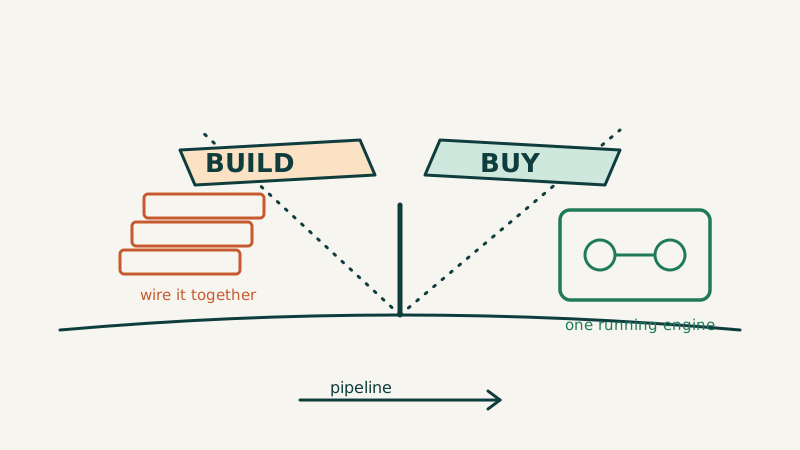
If you would rather not assemble and manage this yourself, an outsourced GTM partner like Vendisys runs the targeting, messaging, and channel mix as one program so you are buying a working motion instead of stitching vendors together.