The reply comes in and the rep freezes. “We already have a vendor.” “Not interested.” “Send me some info.” Most SDRs treat these as the end of the conversation. They are actually the start of one.
An objection early in outbound is almost never a considered decision. The prospect has not evaluated your offer and rejected it. They have received an interruption and produced the fastest sentence that makes the interruption go away. Treating that reflex as a final answer is the single most common reason good sequences underperform. The reps who book meetings are not smoother talkers. They just recognize the reflex for what it is and have a planned response instead of an improvised one.
This is a field guide to the seven objections that show up most in cold email and cold calling, why each one appears, and the frameworks that move the conversation forward without sounding like a rebuttal machine.
The principle underneath every response
Before the scripts, one idea that makes all of them work: acknowledge, then reframe, then advance. You validate what the prospect said so they do not feel argued with, you introduce a piece of information that changes the frame, and you ask for a small next step. Skip the acknowledgment and you sound combative. Skip the reframe and you have nothing new to offer. Skip the ask and the conversation dies from politeness.
Every script below follows that shape. Memorize the shape, not the words.
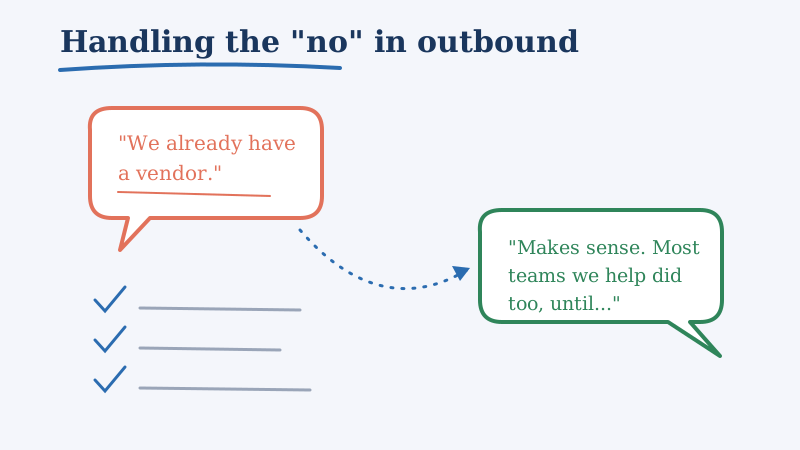
1. “We already have a vendor”
This is the most common objection in outbound, and the most misread. It sounds like a closed door. It is usually just a status update. The prospect is telling you the category is already on their radar, which is far better than indifference.
Do not attack the incumbent. Instead, acknowledge the reality and open a small gap:
“Makes sense, most of the teams we work with were already using something when we first talked. The reason they still took the call was that their existing setup covered X but not Y. Worth a 15-minute look to see if the same gap exists for you?”
The reframe is that having a vendor and being fully served are different things. You are not asking them to rip anything out. You are asking whether a gap exists. That is a much smaller yes.
2. “Not interested”
The fastest reflex there is. It arrives before the prospect has read your value, so responding to it as a considered objection is a mistake. The move is to make it easy to say what the actual concern is.
“Totally fair, and I would probably say the same to a cold email. Quick question so I stop guessing: is it that this is not a priority right now, or that outbound help just is not something you have needed? Either answer is useful to me.”
You are giving them permission to be honest and narrowing an infinite objection into two concrete ones you can actually address. Roughly half the time, the real reason surfaces and it is something you can work with.
3. “Send me some information”
This feels like progress. It usually is not. In most cases it is a polite exit, an information request as a way to end the call without a confrontation. Sending a deck into that void is how deals go quiet.
The response is to trade the information for a small commitment:
“Happy to. So I do not send you a generic overview that wastes your time, what is the one thing that would actually be useful to see? I can put together a short version and we can spend ten minutes on it Thursday.”
You have converted a document dump into a scheduled conversation with a defined agenda. If they will not name the one thing, you have learned the interest was not real, and you saved yourself the follow-up.
4. “We do not have budget”
Budget objections split into two types and you have to know which one you are facing. Sometimes there is genuinely no money, and sometimes budget is shorthand for “I am not convinced this is worth money.” You diagnose by decoupling the conversation from the purchase.
“Understood, and I am not asking you to spend anything today. Budgets get built around problems that are worth solving. If we spent 15 minutes and it turned out this could add real pipeline, would that be a conversation worth having when planning comes around?”
You have moved the frame from “buy now” to “is this worth planning for,” which costs the prospect nothing and keeps the door open. For outsourced outbound specifically, this is also where you can reframe cost as a swap: teams often free up budget by consolidating tools, and a tighter outbound tech stack frequently pays for the program itself.
5. “I am not the right person”
Take this at face value and use it. Unlike most objections, this one is often literally true, and it hands you a referral if you ask correctly. Do not push your pitch on the wrong person. Ask for the right one.
“Appreciate you telling me, that saves us both time. Who on the team owns outbound pipeline these days? Happy to reach out to them directly and mention you pointed me their way.”
The phrase “mention you pointed me their way” matters. An internal referral, even a passive one, gets far more attention than another cold touch. You have turned a dead end into a warm intro.
6. “Now is not a good time”
Timing objections are real, but “not now” without a “when” is just a soft no. Your job is to attach a date to it so the deal does not evaporate into an open loop you have to keep chasing.
“Completely get it, timing is everything with this stuff. Rather than me pinging you every few weeks, when does this actually get real for you? If it is Q4, I will reach back out the first week of October with something specific, not a generic bump.”
You respect their timeline while replacing vague follow-up with a concrete appointment. This also filters seriousness: a prospect with a real future need will give you a date, and one who was brushing you off will not.
7. “Just email me” (on a call)
The verbal cousin of “send me information,” and the most reliable call-ender there is. Agreeing to it feels cooperative and almost always kills the thread. The counter is to agree while keeping one foot in the conversation.
“Will do. So the email is actually worth opening, give me one line: what would make this relevant enough for you to reply? If nothing comes to mind, that is a real answer too and I will not keep bugging you.”
You get a piece of qualifying information and a lower bar for your follow-up email to clear. And again, if they genuinely cannot name anything, you have qualified them out honestly.
Objection handling is a system, not a talent
Notice what none of these scripts do. None of them argue. None of them try to prove the prospect wrong. Every one acknowledges the objection as reasonable, introduces one new piece of framing, and asks for a step smaller than the one the prospect just declined. That is the whole craft.
The reason most teams are bad at this is not that their reps lack charisma. It is that they treat objections as surprises to be improvised through, one rep at a time, with no shared playbook. The fix is to write the responses down, put them in front of every rep, and practice them until the reflex objection meets a prepared reframe every single time. Consistency beats brilliance here, because the objections are predictable and there are only about seven of them.
This is also why so many companies get more traction from an outsourced outbound partner than from building the muscle in-house. A specialist team has heard “we already have a vendor” ten thousand times and has a tested response, a tracked reply rate, and a feedback loop that a two-person internal SDR function will not build for years. The objections do not change from company to company. The quality of the response to them is what separates a sequence that books meetings from one that gets ignored.
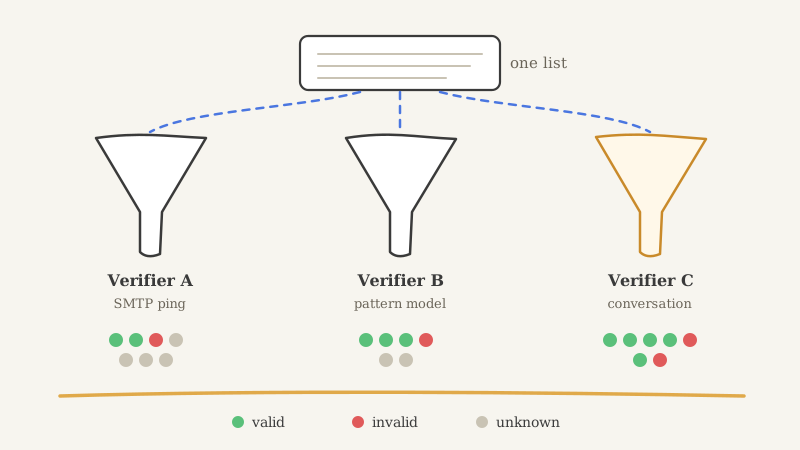
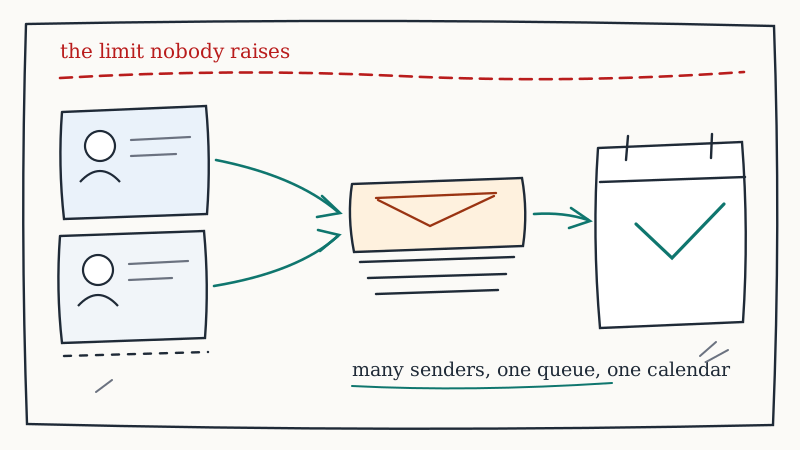
One last piece that sits underneath all of it: none of these frameworks help if your messages never reach a human. Objection handling assumes a reply, and you only get replies if you land in the inbox. Before you optimize what you say to the “no,” make sure your sending infrastructure is clean and your list is validated with a tool like Scrubby, because the best objection response in the world is worthless in a spam folder. And once a prospect does say yes, make the booking frictionless: dropping a real calendar hold into the conversation with something like Kali closes the gap between interest and a meeting on the calendar, which is where a surprising number of hard-won yeses quietly leak away.
Handle the seven objections with a plan, keep the infrastructure clean underneath, and make saying yes effortless. That combination turns the reflexive “no” into the most common opening line of a real conversation.