Outsourced outbound rarely fails with a bang. It fails quietly. The weekly calls stay friendly, the slides still have green arrows, and then one quarter the pipeline number is half of what you forecasted and nobody can quite explain when it went wrong.
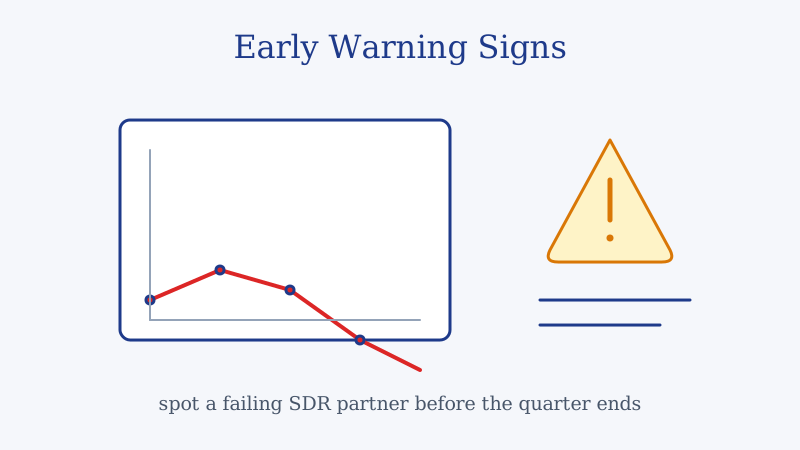
The good news: the failure is almost always visible weeks earlier, if you know what to watch. By the time meeting volume drops, the underlying problems have usually been compounding for a month or more. Here are seven early warning signs that an outsourced SDR engagement is drifting, and what to do about each one before it costs you a quarter.
1. Activity Metrics Replace Outcome Metrics in Reporting
When a partnership is healthy, reporting leads with meetings booked, meetings held, and pipeline created. When it starts to slip, the deck quietly shifts toward emails sent, dials made, and “touches.” Activity volume is easy to inflate and tells you almost nothing about whether the engine is working.
What to do: Insist that every report opens with held meetings and qualified pipeline. If your partner resists, that resistance is itself a signal.
2. The Same Few Accounts Keep Reappearing
A partner who is genuinely working your total addressable market should be steadily expanding coverage. If the same logos cycle through “interested” status week after week without progressing, the team is recycling warm-ish contacts instead of generating net-new conversations.
What to do: Ask for a coverage report: how many unique accounts and contacts have been touched, and how that number is trending. Flat coverage is a red flag.
3. Reply Quality Drops Before Reply Volume Does
Reply rates can hold steady while the kind of replies degrades. “Not now,” “wrong person,” and “unsubscribe” creeping up while genuine “tell me more” responses thin out is an early signal that messaging or targeting has gone stale, well before the meeting count reflects it.
What to do: Sample ten real reply threads each week. You will spot tone and targeting drift faster than any dashboard will.
4. You Cannot See the Email Infrastructure
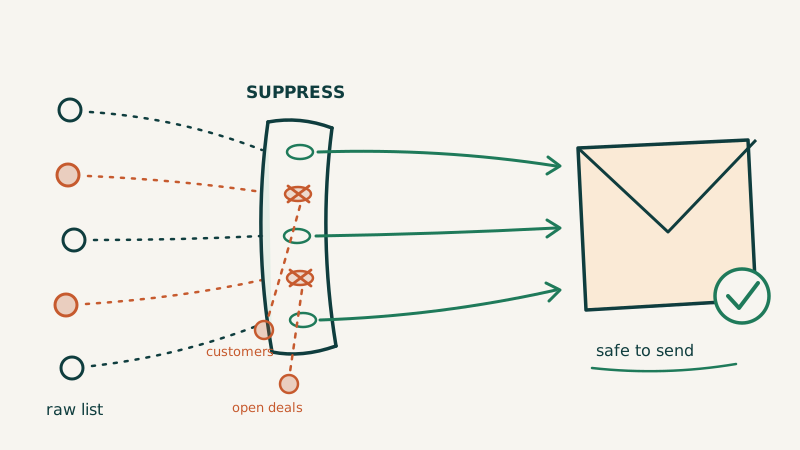
If you do not know how many sending domains and mailboxes are in rotation, how they are warmed, or what the current deliverability picture looks like, you are flying blind. Burned domains and spam-foldered campaigns are the single most common silent killer of outsourced outbound, and they are invisible until results collapse. A quick audit of the sending setup often surfaces the problem in under an hour.
What to do: Require visibility into the outbound infrastructure your partner runs on your behalf, including domain health and deliverability monitoring. A serious partner treats this as table stakes.
5. Speed to Lead Is Slipping
When a prospect replies or books, how fast does someone respond? In outbound, response time is conversion. A partner whose handoffs stretch from minutes to hours is leaking your most valuable moments. Fast, validated routing is what separates a pilot that converts from one that stalls.
What to do: Track median speed to lead explicitly. If it is trending up, the operational discipline behind the engagement is eroding.
6. Personalization Has Quietly Become Templates
Early in an engagement, outreach tends to be sharp and specific. Over time, under volume pressure, it can collapse back into generic templates that any spam filter, and any buyer, recognizes instantly. Generic outreach does not just convert worse; it actively damages your brand and your domains.
What to do: Read the actual emails going out under your name every week. If you would delete it, so will your prospect.
7. The Conversation Stops Being Strategic
The clearest signal of all is the texture of your conversations. A strong partner brings you market feedback, messaging experiments, and ideas about which segments are responding. A drifting one shows up to report numbers and little else. When curiosity disappears, performance usually follows.
What to do: If the last three calls were status updates with no insight or experimentation, schedule a direct conversation about strategy and ownership.
Catching It Early Is the Whole Game
None of these signals require waiting for a quarter to close. They show up in the reporting cadence, the email copy, the coverage data, and the tone of your calls, often a month or more before pipeline reflects the damage.
The teams that get the most out of outsourced outbound treat the relationship like infrastructure they actively monitor, not a black box they check on quarterly. If you are evaluating whether your current setup is built to last, it helps to understand what a fully managed outsourced GTM engine should look like when it is running well, so you have a clear benchmark to hold any partner against.
And once your outbound is generating real conversations, make sure the channel reaching those prospects is pulling its weight too. Many teams layer calendar-invite outreach through Kali on top of email to reconnect with prospects who have gone quiet, turning a stalling pipeline back into booked meetings.
Watch the early signals, demand outcome-based reporting, and keep the relationship strategic. Do that, and you will fix a drifting engagement while it is still a course correction instead of a post-mortem.