Ask ten sales leaders why their outbound is underperforming and nine will blame the copy. They rewrite subject lines, test new opening hooks, and swap one call to action for another. The reply rate barely moves.
The real problem is almost never the words in any single email. It is the cadence: how many touches you send, on which channels, and with how much space between them. A mediocre email inside a well-built cadence will out-book a brilliant email sent once and abandoned. Timing is the lever most teams never pull.
This guide breaks down how to design an outbound email cadence from first touch to booked meeting, with specific spacing and channel logic you can copy into any sequencing tool today.
Why cadence beats copy
The data on outbound has been consistent for years: the majority of positive replies come after the first email. Prospects miss your first message, get pulled into a meeting, or simply are not in buying mode the day you happen to land in their inbox. A single touch catches only the small slice of people who are ready at that exact moment.
A cadence widens that window. Every additional, well-timed touch gives a busy buyer another chance to notice you when their context has shifted. The goal is not to nag. It is to stay present across the two to three weeks during which a prospect’s priorities might rotate toward the problem you solve.
That is why teams that obsess over copy while sending one or two touches plateau, and teams with average copy and a disciplined seven-touch cadence keep filling pipeline. If you are deciding where to invest your next hour, fix the cadence first.
The anatomy of a cadence that converts
A strong outbound cadence has four design decisions baked into it. Get these right and the copy has room to work.
1. Length: aim for 6 to 8 touches over 14 to 18 days
Too short and you quit before the prospect’s context changes. Too long and you irritate people and burn your domain reputation. For most B2B motions, six to eight touches spread across roughly two and a half weeks is the sweet spot. That gives you enough surface area to catch buyers in different moods without crossing into harassment.
2. Spacing: widen the gaps as you go
Early touches should be close together because the prospect has no memory of you yet. Later touches should spread out because you want to feel persistent, not desperate. A spacing pattern that works:
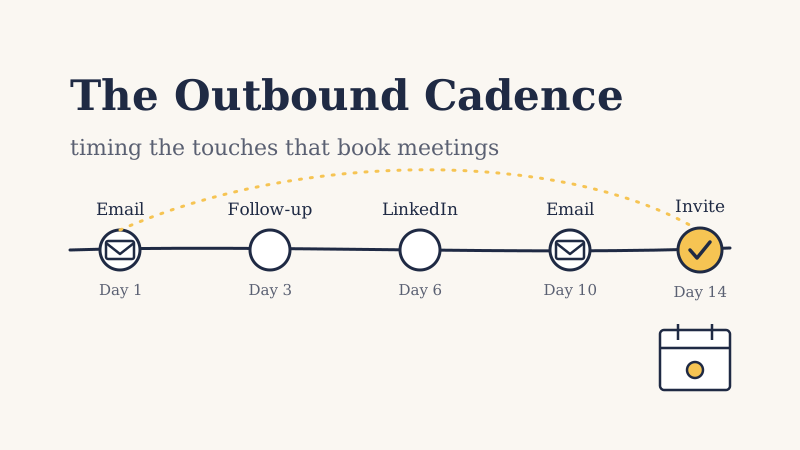
- Touch 1: Day 1
- Touch 2: Day 3
- Touch 3: Day 6
- Touch 4: Day 9
- Touch 5: Day 13
- Touch 6: Day 17
Notice the gaps grow from two days to four. The compounding space signals confidence rather than panic.
3. Channel mix: do not live in the inbox alone
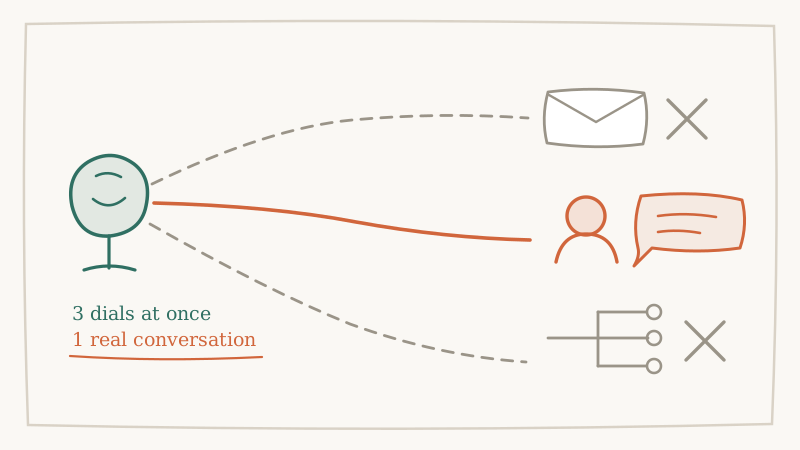
Email is the backbone, but a cadence that only uses email leaves replies on the table. Layer in a LinkedIn view or connection request around touch three, and reserve a calendar invite or meeting link for a later, high-intent touch. Booking tools like Kali that send calendar invites directly can turn a warm reply into a held meeting without the back-and-forth of scheduling, which is exactly where many cadences leak.
4. Message arc: shift the angle, not just the words
Each touch should approach from a slightly different angle: a problem-first message, then a proof point, then a short nudge, then a relevant resource, then a clean breakup email. If every touch repeats the same pitch, the prospect learns to ignore the pattern. Variety keeps each open feeling like a new conversation.
A sample 7-touch cadence you can steal
Here is a concrete sequence that balances all four decisions above.
- Day 1, Email. Short problem-first message. One sentence of context, one specific pain, one soft ask. No attachments, no calendar link yet.
- Day 3, Email reply. Reply on the same thread with a one-line proof point: a metric, a similar customer, or a quick result. Threading keeps it familiar.
- Day 6, LinkedIn. View the profile and send a connection request with a one-line note that references the same problem. No pitch.
- Day 9, Email. New thread, new angle. Lead with a relevant resource or insight rather than a pitch. Give value before asking again.
- Day 12, Email reply. A genuinely short nudge: “Worth a quick look, or is this off your radar right now?” Easy to answer in five words.
- Day 15, Email with meeting option. Now introduce a concrete time. Offer a calendar invite for a 15 minute call. This is where a tool that sends real invites earns its place in the stack.
- Day 18, Breakup email. Acknowledge you will stop reaching out, restate the value in one line, and leave the door open. Breakup emails routinely pull the highest reply rate in the entire sequence because they create mild urgency and remove pressure at the same time.
Seven touches, three channels, eighteen days. Most prospects who book will do so somewhere between touch four and touch seven.
Protect the cadence with clean data and deliverability
A perfectly spaced cadence still fails if half your emails never reach the inbox. Two things quietly kill outbound performance before the copy ever gets a vote.
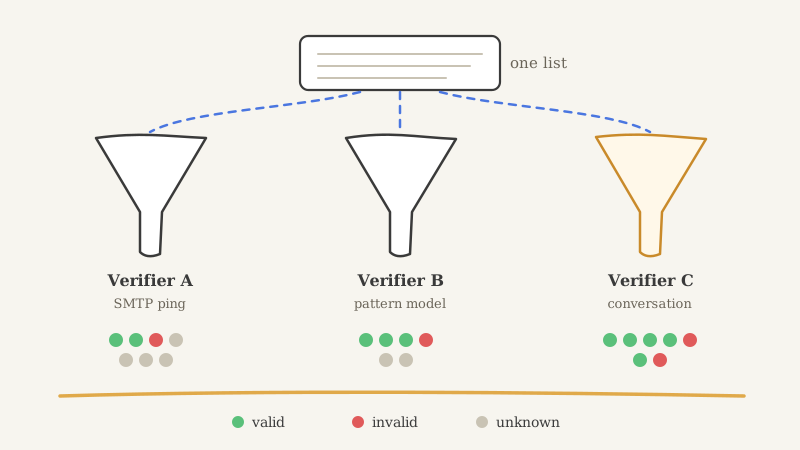
The first is list hygiene. Sending to invalid, catch-all, or risky addresses spikes your bounce rate, and a high bounce rate tanks your domain reputation across every mailbox provider. Before a single touch goes out, run your list through a verification layer. Tools like Scrubby validate addresses and weed out the spam traps and dead inboxes that would otherwise drag your whole sending domain down. Clean lists protect the deliverability that the entire cadence depends on.
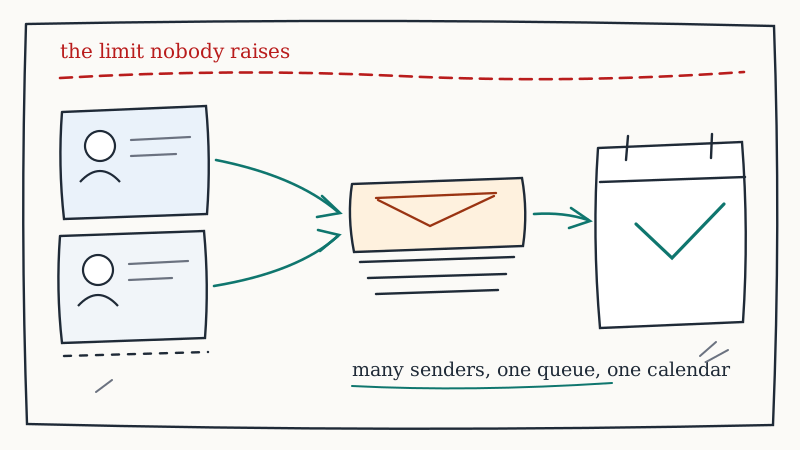
The second is volume discipline. A six to eight touch cadence multiplies your send volume fast. Ten prospects become sixty or seventy emails over two weeks. Warm your domains, cap daily sends per inbox, and spread volume across multiple sending addresses so no single domain gets flagged. Cadence design and deliverability are not separate projects. A longer cadence only works if your infrastructure can carry the load without burning.
When to outsource the cadence entirely
Designing the cadence is the easy part. Running it well, every day, across dozens of inboxes, with clean data and disciplined follow-up, is operational work that most founders and early sales hires underestimate. It demands deliverability monitoring, reply triage, A/B iteration, and the patience to let a fourteen day sequence play out for every single prospect.
Teams that do not have a dedicated outbound operator often find that the cadence degrades within weeks: touches get skipped, lists go stale, and domains start landing in spam. This is the exact gap outsourced go-to-market infrastructure is built to close. At Vendisys, the cadence design, sending infrastructure, list verification, and follow-up discipline run as a managed system, so the sequence that books meetings on paper actually executes in practice. If your in-house team is the bottleneck on consistency rather than strategy, handing the execution to a partner that lives in outbound every day is often the faster path to predictable pipeline.
The takeaway
Stop rewriting subject lines and start engineering the sequence. Build a six to eight touch cadence over roughly two and a half weeks, widen the spacing as you go, mix in LinkedIn and a real calendar invite, vary the angle of each message, and protect the whole thing with clean lists and warmed domains. Get the timing right and average copy will book meetings that brilliant one-off emails never could.
Cadence is the part of outbound you can engineer. Engineer it first.