Ask ten sales leaders to show you their ideal customer profile and you will get ten slide decks that say roughly the same thing: “B2B SaaS companies, 50 to 500 employees, Series A or later, in North America.” That is not an ICP. That is a firmographic filter, and it is the reason so much outbound spends its budget talking to accounts that were never going to buy.
A real outbound ICP is an operating tool. It tells your team who to contact, why those accounts are likely to convert, and what to say to them. Done well, it is the single highest-leverage thing you can do to lift response rates and meeting quality. Done poorly, it quietly drains every other part of your outbound engine.
Here is how to build one that actually moves pipeline.
Why Most ICPs Fail
The typical ICP fails for three reasons.
First, it is built from aspiration rather than evidence. Someone decides the company “should” sell to mid-market enterprises, so the ICP describes the customer they wish they had instead of the customer who already closes fast and stays.
Second, it stops at firmographics. Industry, headcount, and funding stage are easy to pull, so that is where most profiles end. But those attributes describe a category, not a buyer. Two companies with identical headcount can have completely different reasons to buy, or no reason at all.
Third, it never reaches the people running outbound. The ICP lives in a strategy doc while reps build lists off whatever LinkedIn search felt convenient that morning. If the people writing the messages cannot recite the ICP from memory, it does not exist.
Start With Your Best Closed Won Accounts
The most reliable input for an outbound ICP is your own history. Pull your last 20 to 40 closed won deals and look for patterns that the firmographic filter would miss.
For each account, capture:
- What triggered the purchase. Was there a hiring spike, a funding round, a new executive, a competitor switch, a compliance deadline? Triggers are the difference between an account that fits and an account that is ready.
- Time to close. Short sales cycles tell you where your value is obvious. Long ones tell you where you had to educate the market, which is expensive in outbound.
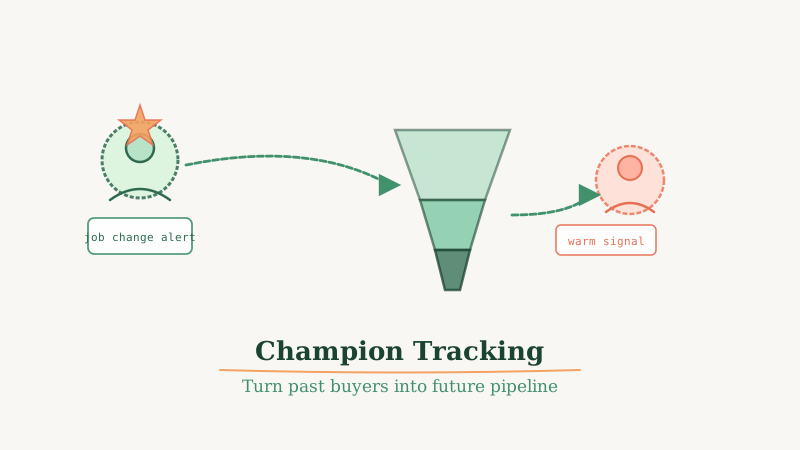
- Who championed the deal. The title that actually drove the purchase is rarely the title you assumed. Find the real economic buyer and the real internal champion.
- Whether they stayed. Retention is the truest signal of fit. An account that churned in six months should not shape your profile, no matter how fast it closed.
When you line these up, the genuine pattern usually surprises people. You may find that your best accounts cluster around a specific trigger or a particular role far more tightly than around headcount or industry. That cluster is your real ICP.
Layer in the Three Dimensions That Matter
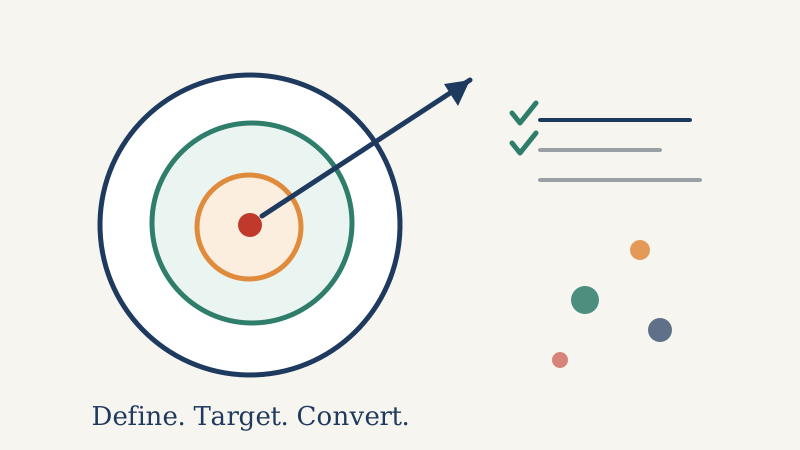
A working outbound ICP has three layers, and you need all of them. Firmographics alone is why most profiles fail.
1. Firmographic fit. Industry, size, geography, business model, and tech stack. This is the coarse filter that defines the universe of accounts worth considering. Keep it, but do not stop here.
2. Situational fit (the triggers). What has to be true right now for this account to need you? New funding, a leadership change, rapid hiring, a product launch, a regulatory shift, or a public signal that a competitor is failing them. Situational fit is what turns a list of companies into a list of timely conversations. It is also the layer that most teams skip, which is exactly why their outreach reads as generic.
3. Persona fit. The specific roles that feel the pain, control the budget, and can champion the deal internally. For each persona, write down the pain in their words, the metric they are measured on, and the objection they will raise first. This is what makes a cold message land instead of bounce.
When all three layers line up on a single account, that account belongs at the top of your list. When only firmographics match, that account belongs at the bottom, or off the list entirely.
Turn the ICP Into a Scoring Model
A profile you cannot act on is a poster, not a tool. Convert your three layers into a simple scoring model so reps can rank accounts objectively instead of by gut feel.
Assign points to each signal. For example: 3 points for a matching trigger, 2 points for the right persona being present and reachable, 1 point for firmographic fit. Sum the score for each account and prioritize accordingly. You do not need a data science team for this. A spreadsheet and an honest set of criteria will outperform most “AI-powered” scoring tools, because the inputs are ones you actually understand.
The discipline of scoring forces a useful conversation: which signals correlate with deals, and which just felt important? Revisit the weights every quarter against fresh closed won data and adjust. The model should get sharper as your evidence grows.
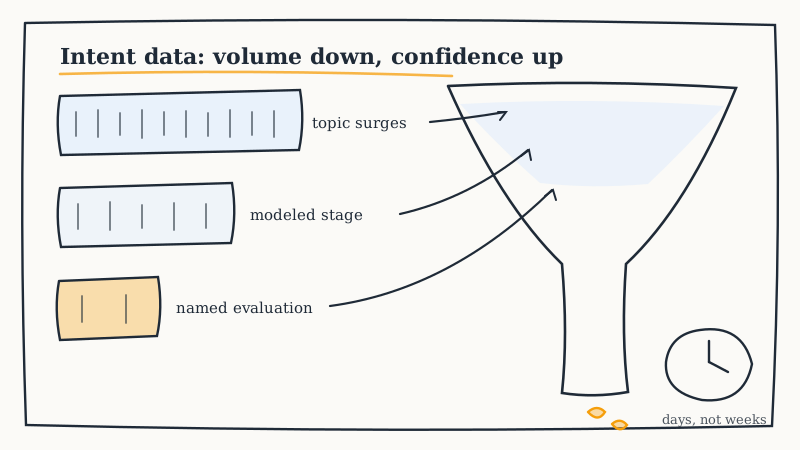
If you want to score accounts on real buying intent rather than static firmographics, watching for competitive and behavioral signals is where the leverage is. That is the entire premise behind tools like CAM, which monitor competitor websites and public signals so your team knows which accounts are in motion before a rep ever reaches out.
Connect the ICP to Clean, Validated Data
A precise ICP is worthless if the contact data behind it is wrong. The most common failure in outbound is not bad targeting, it is targeting the right accounts with stale or invalid contact information, then blaming the message when nothing lands.
Before any list goes into a sequence, validate it. Dead inboxes, role addresses, and spam traps will tank your deliverability, distort your response metrics, and slowly erode your sending reputation until even your good emails stop arriving. Running every list through a validation pass with a tool like Scrubby protects both your data quality and your sender reputation, so the response rates you measure reflect message quality rather than infrastructure failures.
Clean data also keeps your ICP honest. When you can trust that a low response rate came from real, deliverable inboxes, you can actually learn whether the targeting was right, instead of guessing.
Make the ICP a Living Document
The single biggest mistake teams make after building a good ICP is treating it as finished. Markets shift, your product evolves, and the accounts that converted last year may not be the ones converting now. Review the profile on a fixed cadence, monthly for fast-moving teams, quarterly at minimum, and feed every new closed won and closed lost deal back into it.
Pay special attention to closed lost. The accounts that fit your firmographics perfectly but never bought are telling you something the won deals cannot. Often they reveal a missing situational trigger: the right kind of company, but not at the right moment. Capturing that distinction tightens your scoring model faster than anything else.
Where This Leaves You
A strong outbound ICP is not a description of who you would like to sell to. It is an evidence-based, scored, living model of who buys, why, and when, built from your own deal history and kept honest with clean data. It tells reps exactly which accounts to prioritize and gives them the situational and persona context to write messages that earn replies.
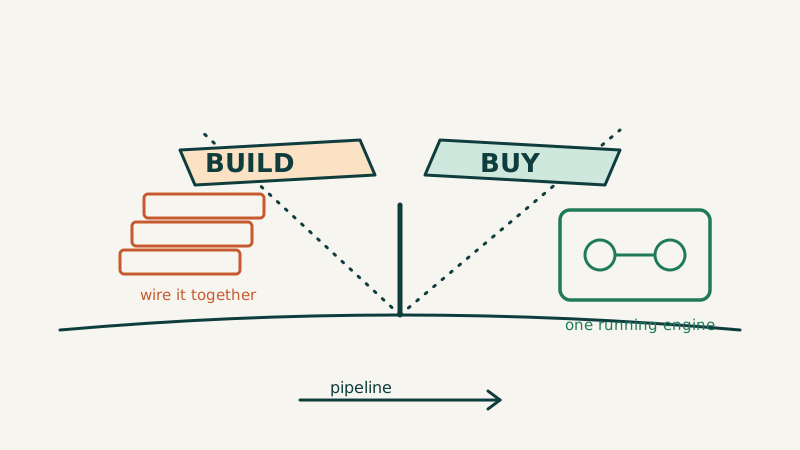
That precision is the difference between an outbound program that burns budget on volume and one that produces predictable pipeline. If building and maintaining that engine in-house is more than your team can carry right now, an outsourced GTM partner like Vendisys can operate the full motion for you: ICP development, list building, validation, and multi-channel execution, so you get the pipeline without standing up the infrastructure yourself.
Start with your last 30 closed won deals this week. The pattern is already in your data. Your job is to stop guessing and go find it.